Gear That Actually Matters
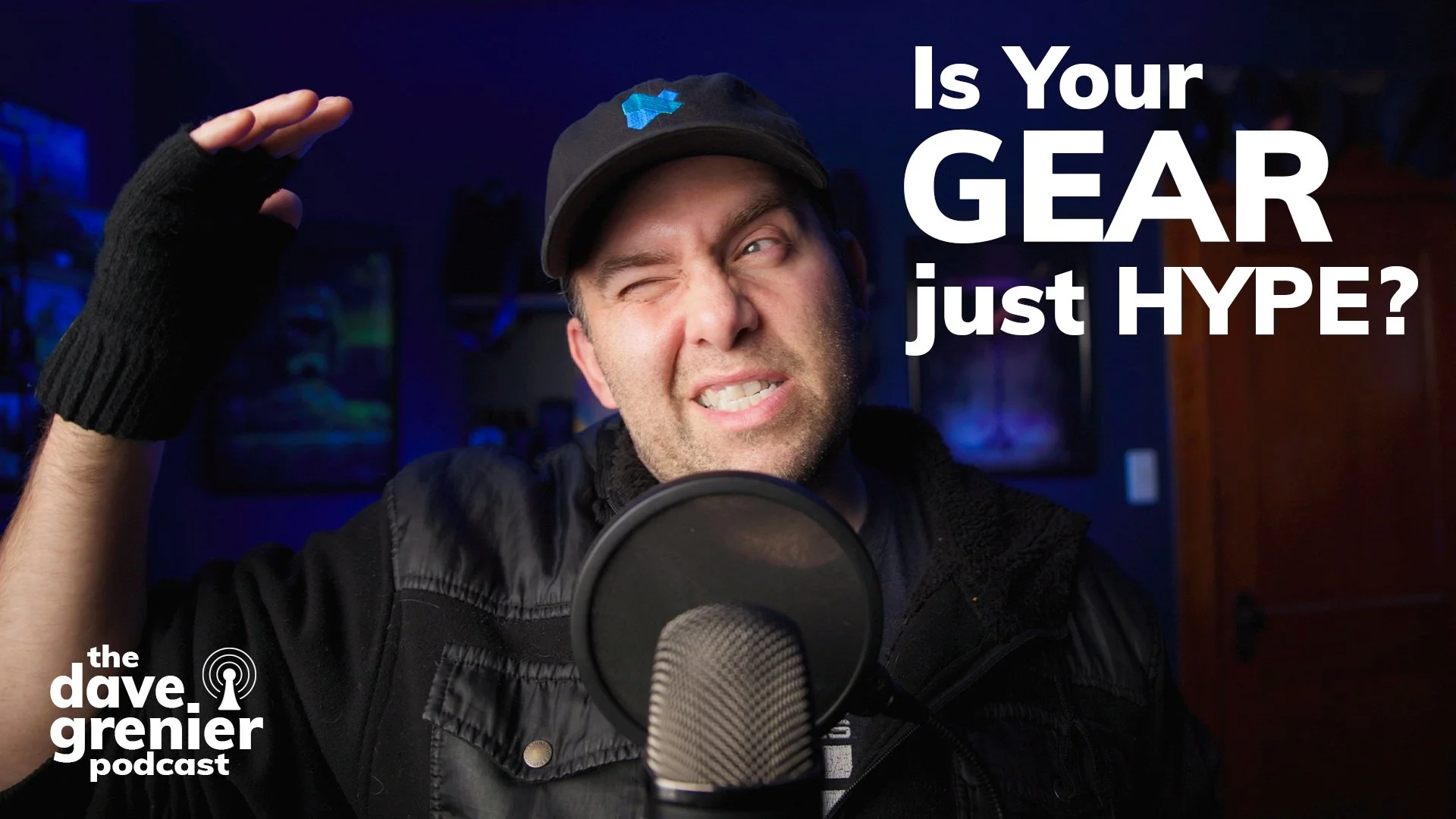
I love talking about gear, but gear talk gets weird fast. It turns into wish lists, brand wars, and people buying things to feel “official.” This episode was my attempt to drag it back to reality.
Here’s the core idea: gear only matters if it solves a problem in your workflow. Not a hypothetical problem. Not a YouTube problem. A problem you actually hit in the field.
Your Workflow Decides Your Kit
I’ve worked run-and-gun where you are outside, moving fast, and you cannot control lighting, audio, or the environment. I’ve also done the opposite, full studio setups where you can dial everything in.
Those are two different planets. So any recommendation I give comes with an asterisk: it might not work for you, and that’s fine. Your job is to figure out where your pain points are, then buy to fix those.
What I Actually Carry in the Field
When I’m shooting construction or environmental work, I need to move. A tripod often stays behind because it slows me down. My main setup is simple: camera, one primary lens, and a utility belt with extra lenses, SD cards, batteries, and the little stuff that saves a shoot.
Most of the time, my main lens is a 24–70 f/2.8 because it gives me versatility in one shot. I keep a couple primes as backup, not because primes are magic, but because if something breaks, I still need to deliver. I also keep redundancy nearby, a second camera in the car, extra batteries, and a plan for when things go sideways.
Budget Gear That Still Gets Work Done
When you’re starting out, you might have tastes bigger than your budget. I get it. I’ve felt the “just let me buy the shiny thing” urge too.
But there is a lot of good entry-level gear that can carry you a long way. Brands like Neewer and SmallRig have options that are genuinely usable, especially while you’re still discovering your workflow.
I also talked about buying cheaper lenses as a starting point. A cheap lens can be “good enough” while you learn, as long as you understand the tradeoffs and you’re not pretending it’s the same thing as higher-end glass.
Lighting: From Umbrellas to a Real System
My lighting journey started with a cheap photo kit: stands, bulb holders, umbrellas, and a bag that basically fell apart immediately. The stands still have value, but that kit was a “get started” moment.
Later, I moved into the Aputure ecosystem and it taught me what a real lighting system feels like. I’m lighting my set in this video with the Aputure 600x, plus an Amaran light bar for the colored background. The ability to control intensity and color quickly, without running across the room, is the kind of upgrade that actually changes your workflow.
Client Perception Is Real, But Don’t Go Into Debt
I shared a story where a client reacted to a shooter using the company’s lower-end gear. The photos were fine, but the client had already gotten used to seeing my big lens, my gear, my “pro look.” Their perception got wrapped up in the equipment.
That said, do not use that story to justify debt. At the end of the day, what matters most is how good the results are, how smoothly you deliver, and how easy you are to work with.
If You Remember One Thing
Buy gear when it solves a real problem in your workflow, and never confuse “looking professional” with doing professional work.
Until next time, Be Good to Each Other.
- Dave
