Blog

I think I finally figured out my path
This is a reflection on finding a direction that finally feels right, building community around typewriters, and realizing that sometimes taking one small chance is enough to show you what to build next.
Regarding the video posted, above: This is the complete analog portion of writing a this blog article, recorded in real time using an Underwood Noiseless 77.
This is my process, from start to finish—complete with long pauses, a dictionary search, and editing with red pen. After the camera turns off I retype the article onto the computer so I can publish it on this site.
This is a look behind the scenes at how I think and work. My hope is that it adds some calm to an otherwise energized world and that it helps beginners see that it's not about a constant flurry of words to the page. The process is the journey. Don't rush it and you'll be rewarded for your efforts.
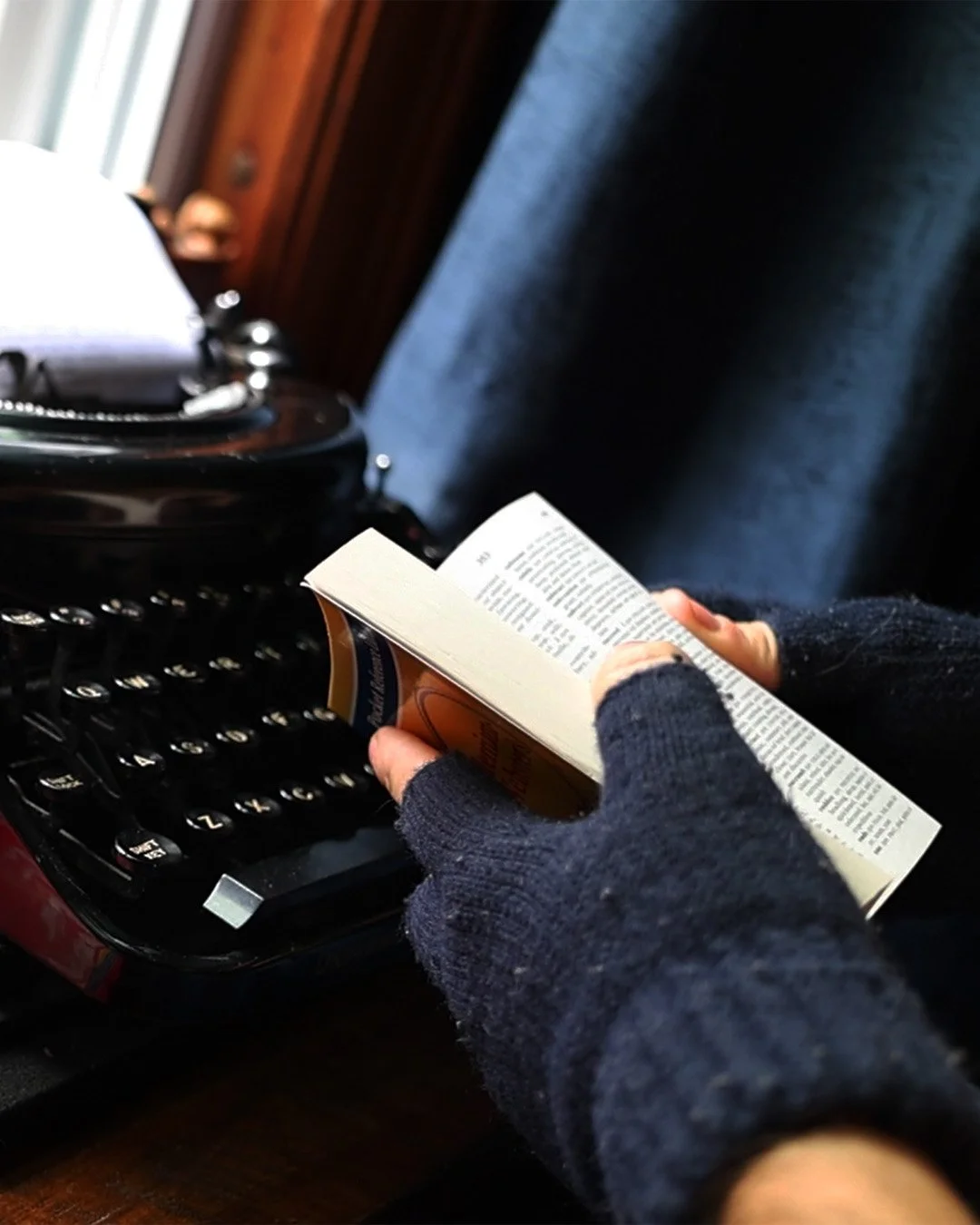
I think I’ve finally figured my path—a clear direction of what gets me energized coupled with a mission greater than ‘I want to help people’. Helping to uplift the typewriter community has been the first time where I have reacted in such a quick, timely manner without it feeling like a chore.
Recently, for those that don’t know, I started an in-person typewriter meetup called Tappa Tappa. That quickly saw the creation of an online version, to help facilitate the folks that don’t have access to a local community. We haven’t met for that, yet, but it’s coming up in a couple weeks, followed-up quickly by the next in-person meetup (the second, only).
I’m very excited but more importantly, very focused. I’ve done this ‘creator thing’ for a while, choosing to focus on my media production skills to help other people in the same field, but it’s felt hollow for a long time. That space is saturated and virtually all the comments from the audience are on gear-related topics. Gear is fun but it’s not where my focus is. I want to be a part of a community that engages in deep conversation. I want to get to know people and to give them a safe space to be themselves. That has been a journey that’s been hard to figure out, until now.
There’s a hunger in this typewriter community. We’re kind of seen as misfits. Cool misfits (depending on who you talk to), but misfits nonetheless; When I posted the first ‘anyone want to meet up’ post, I was no different than anyone else. I was nervous people wouldn’t show up and that the interest people expressed would be superficial only. Of course when the event started and nobody was there yet I felt a little disappointment. But five minutes in, the first person arrived. A few minutes after that we had some more. It had worked. Taking a chance paid off. A small community had been connected, if even only for a few hours, one time. After that, I was hooked. [You can read about that meetup, here.]
Even if none of the other events amount to anything (which could still happen), the proof of concept was achieved. The potential was truth. This was something I could build on. So, build I am.
More will be coming as the weeks continue. But, this morning I launched my Patreon community. My focus is FREE content, but it provides me a place for more casual and loose discussion or sharing. Pictures of paper resting on a typewriter, notebook thoughts by candlelight, and other behind-the-scenes things that don’t warrant a website post. That is my ‘kitchen table’ approach. Things I would share with you in an informal way, like you were invited over for coffee. I’d love for you to join the conversation there. Again, it’s free—I’m not looking to put up a velvet rope around interactions. There is a paid tier but it’s merely to show support, not create a boundary.
Whether you join us over there or not, thank you for being a part of this journey. I’m happy to be a part of this community and elated that I may be able to help it grow.
Until next time, be good to each other.
Dave

Embrace the mistakes.
Celebrate imperfection.

I Have a Problem with Dopamine
A reflection on dopamine, digital overstimulation, and how typewriters and other analog hobbies help me slow down, reconnect, and feel more grounded.
Regarding the video posted, above: This is the complete analog portion of writing a this blog article, recorded in real time using an Underwood Noiseless 77.
This is my process, from start to finish—complete with long pauses, a dictionary search, and editing with red pen. After the camera turns off I retype the article onto the computer so I can publish it on this site.
This is a look behind the scenes at how I think and work. My hope is that it adds some calm to an otherwise energized world and that it helps beginners see that it's not about a constant flurry of words to the page. The process is the journey. Don't rush it and you'll be rewarded for your efforts.
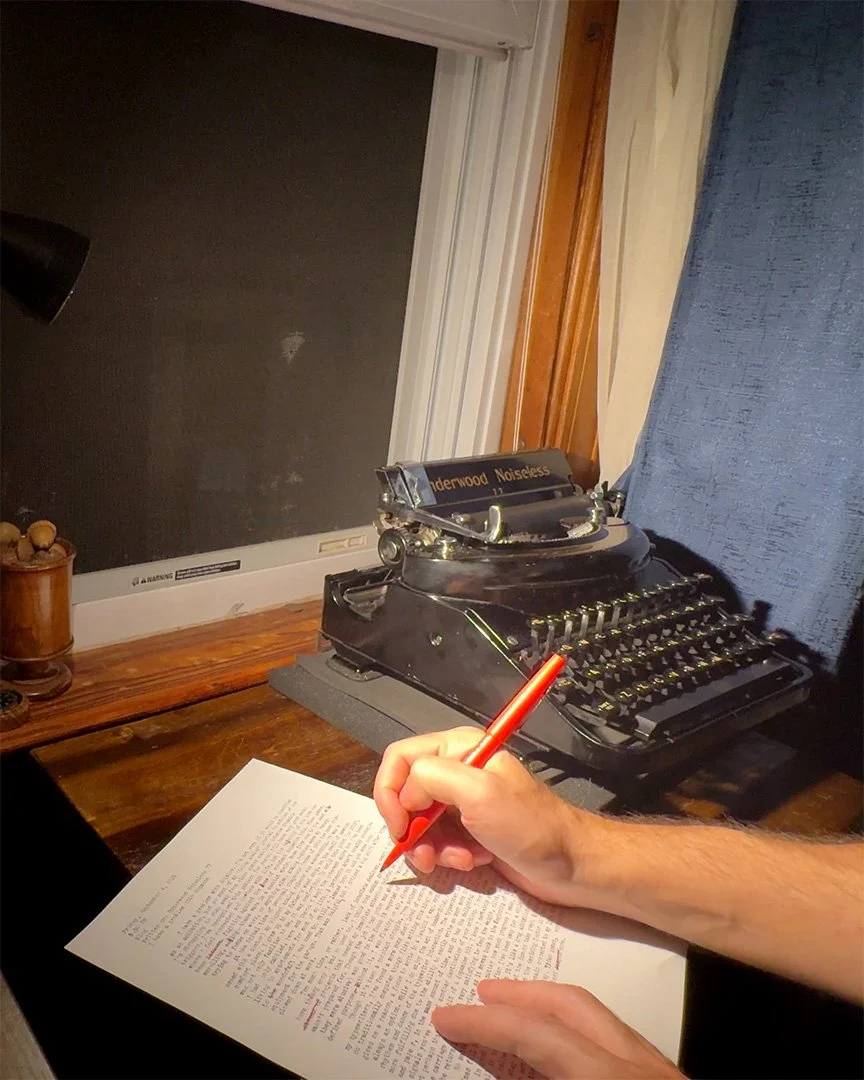
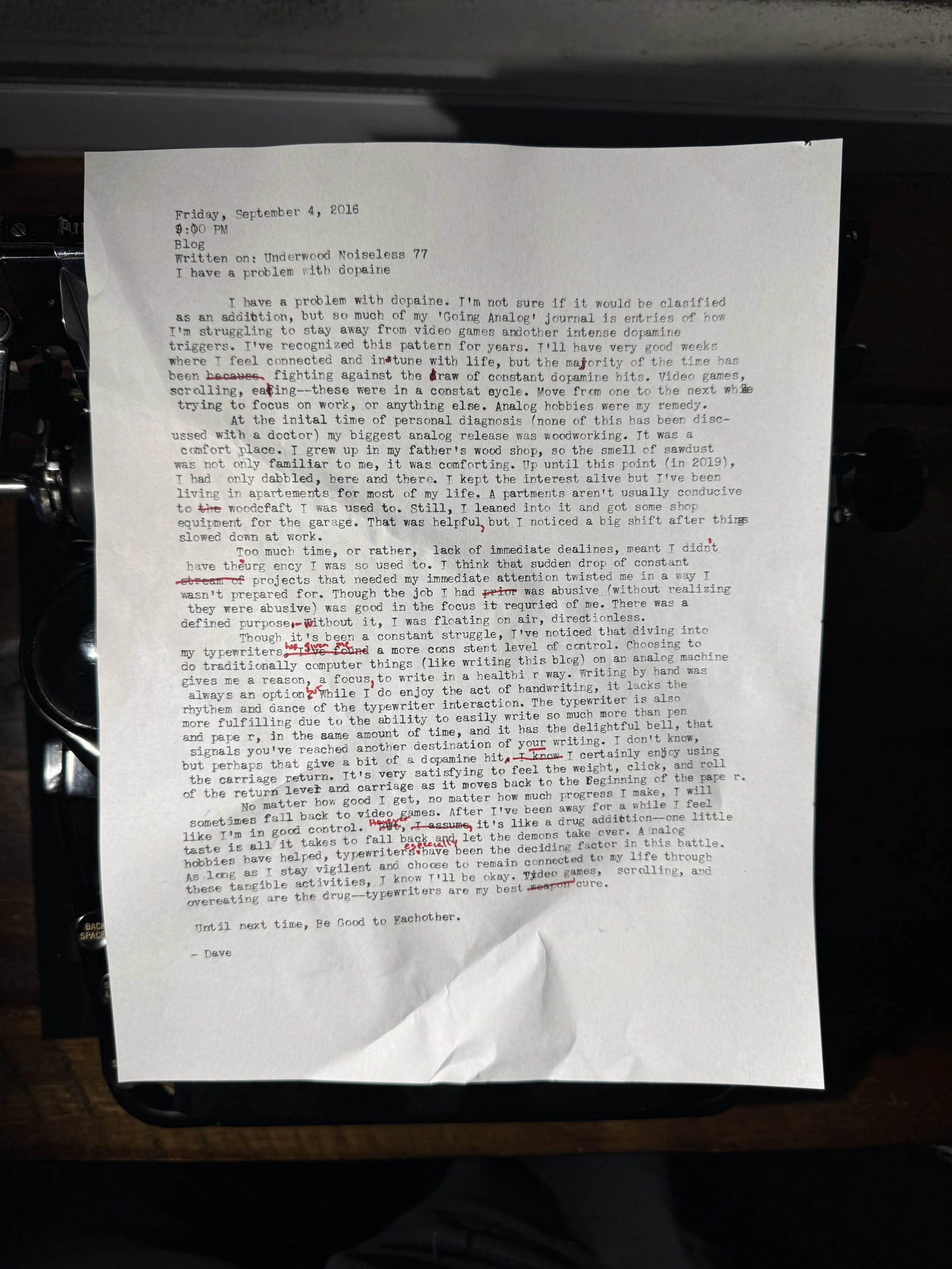
I have a problem with dopamine. I’m not sure if would be classified as an addiction, but so much of my ‘Going Analog’ journal is entries of how I’m struggling to stay away from video games and other intense dopamine triggers. I’ve recognized this pattern, for years. I’ll have very good weeks, where I feel connected and in-tune with life, but the majority of the time has been fighting against the draw of constant stimulation. Video games, scrolling, eating—these were in a repeat cycle. Going from one to the next while trying to focus on work, or anything else. Analog hobbies have been my remedy.
At the initial time of personal diagnosis (none of this has been discussed with a doctor) my biggest analog release was woodworking. It was a comfort place for me. I grew up in my father’s wood shop, so the smell of sawdust was not only familiar, it was comforting. Up to 2019 I had only dabbled in the craft. I kept the interest alive but I’ve been living in apartments for most of my life, which are not usually conducive to woodcraft. Still, I embraced it and got some shop equipment for the garage that I was lucky enough to get some space in. That was helpful, but I noticed a big shift after things slowed down at work.
Too much time, or rather, lack of immediate deadlines, meant I didn’t have the urgency I was so used to. I think the sudden drop of constant projects that needed my immediate attention twisted me in a way I wasn’t prepared for. Though the job was deeply unhealthy, it did require unrelenting focus. There was a defined purpose and without it, I was floating in the air, directionless.
Though it’s been a constant struggle, I’ve noticed that diving into typewriters has given me a more constant level of control. Choosing to write this blog (traditionally something reserved for the screen) on an analog machine requires more intention for each word, a deliberate slowdown, which reduces the mental ‘buzz’ of digital influence. Writing by hand was always an option but, while I do enjoy the act of handwriting, it lacks the rhythm and dance of the typewriter interaction. The typewriter is also more fulfilling due to the ability to easily write so much more than pen and paper, in the same amount of time, and it has the delightful bell that signals you’ve reached another destination of your writing. I don’t know, but perhaps that gives a bit of a dopamine hit—I certainly enjoy hearing it. The carriage return is also satisfying—the resistance and click of the return lever, the weight and roll of the carriage as it moves back to the beginning of the paper…so satisfying.
No matter how much progress I make, I tend to fall back to video games. After I’ve been away for a while I feel like I’m in good control. It’s like a drug addiction, I suppose—one little taste is all it takes to fall back and let the demons take over. Analog hobbies have been the deciding factor in this battle, typewriters especially. As long as I stay vigilant and choose to remain connected to my life through these tangible activities, I know I’ll be okay. Video games, scrolling, and overeating are the drug—increasing my analog influence is my best way back.
Until next time, be good to each other.
Dave
Embrace the mistakes.
Celebrate imperfection.
Building a community—The Start of the ‘Tappa Tappa’ Typewriter Meetup
A reflection on the first Tappa Tappa typewriter meetup, how a shared interest became an icebreaker, and why making space for community matters.
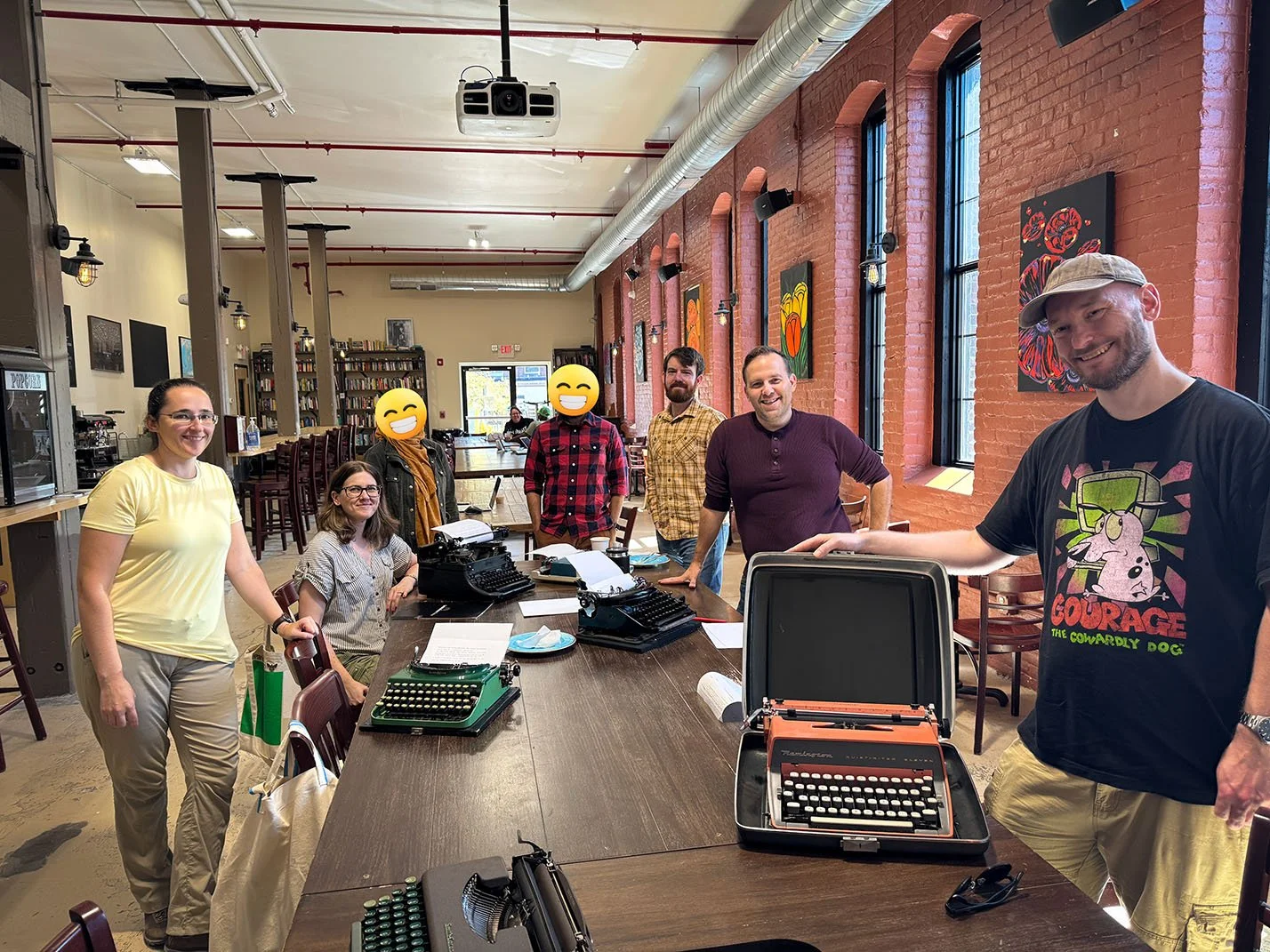

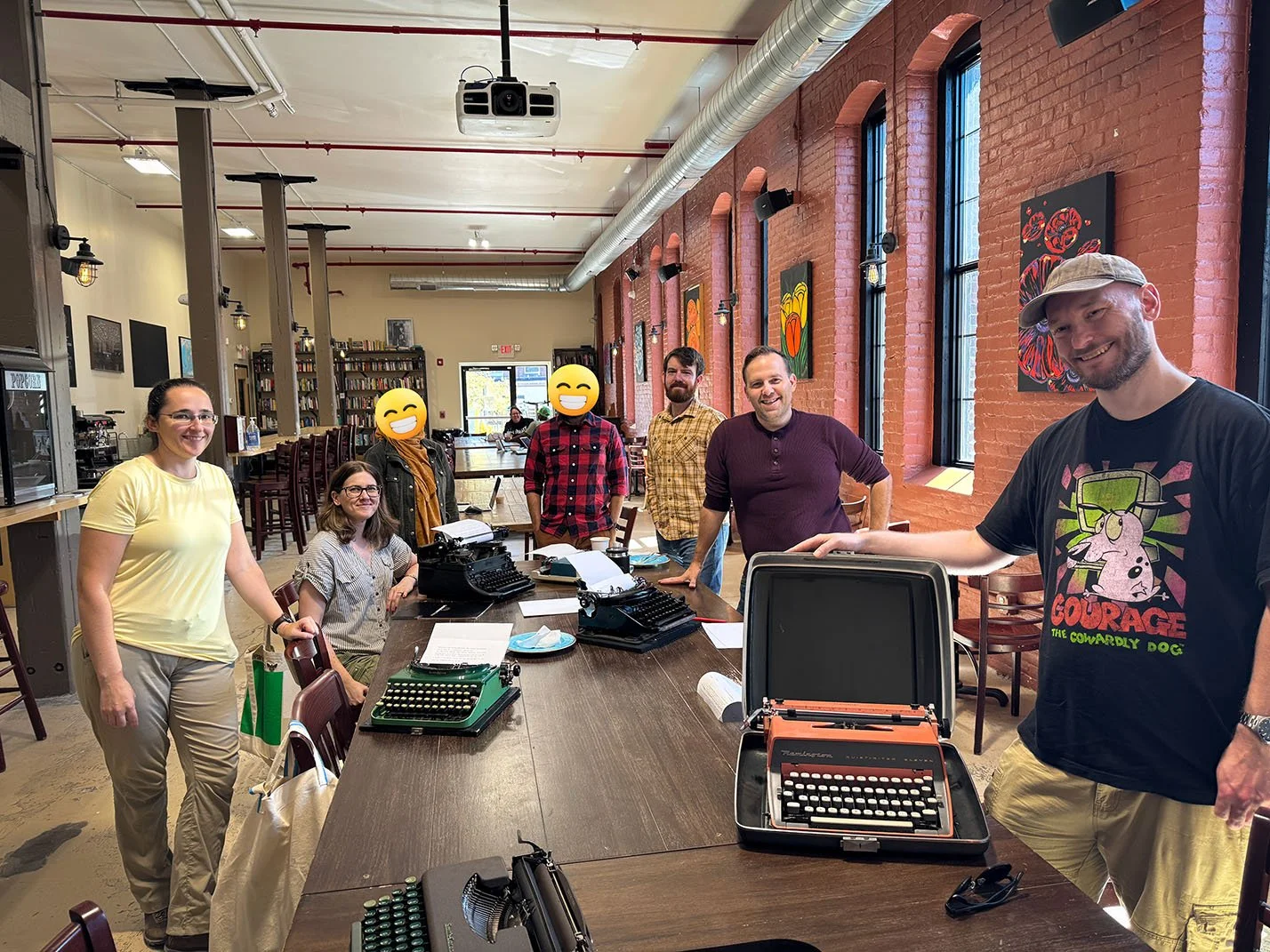
Last Saturday I had my first typewriter meetup, affectionately named “Tappa Tappa”. I had some interest when I listed it online but was unsure off the enthusiasm would equate to people actually showing up. Life gets in the way, other priorities take its place, and nerves of putting yourself out there to a group of strangers increase as the day approaches. I wouldn’t have faulted people for not showing up, but they did.
There were seven of us. Some were accompanied by their significant others, who weren’t into typewriters, but came for support (my wife came for the same reason, though she stayed at an adjacent table to work on her own project) while others bravely entered the room with only their machine and a heart full of courage (and maybe some nerves).
Immediately, we started talking about our machines—what we like about them, what we’re writing, and other typewriter-specific topics. Soon, though, we transitioned to life and getting to know each other outside the world of typewriters. The machines gave us a common ground and an ice breaker—an excuse to get out of the house and meet people with, at least one, similar interest. There really wasn’t much typing getting done.
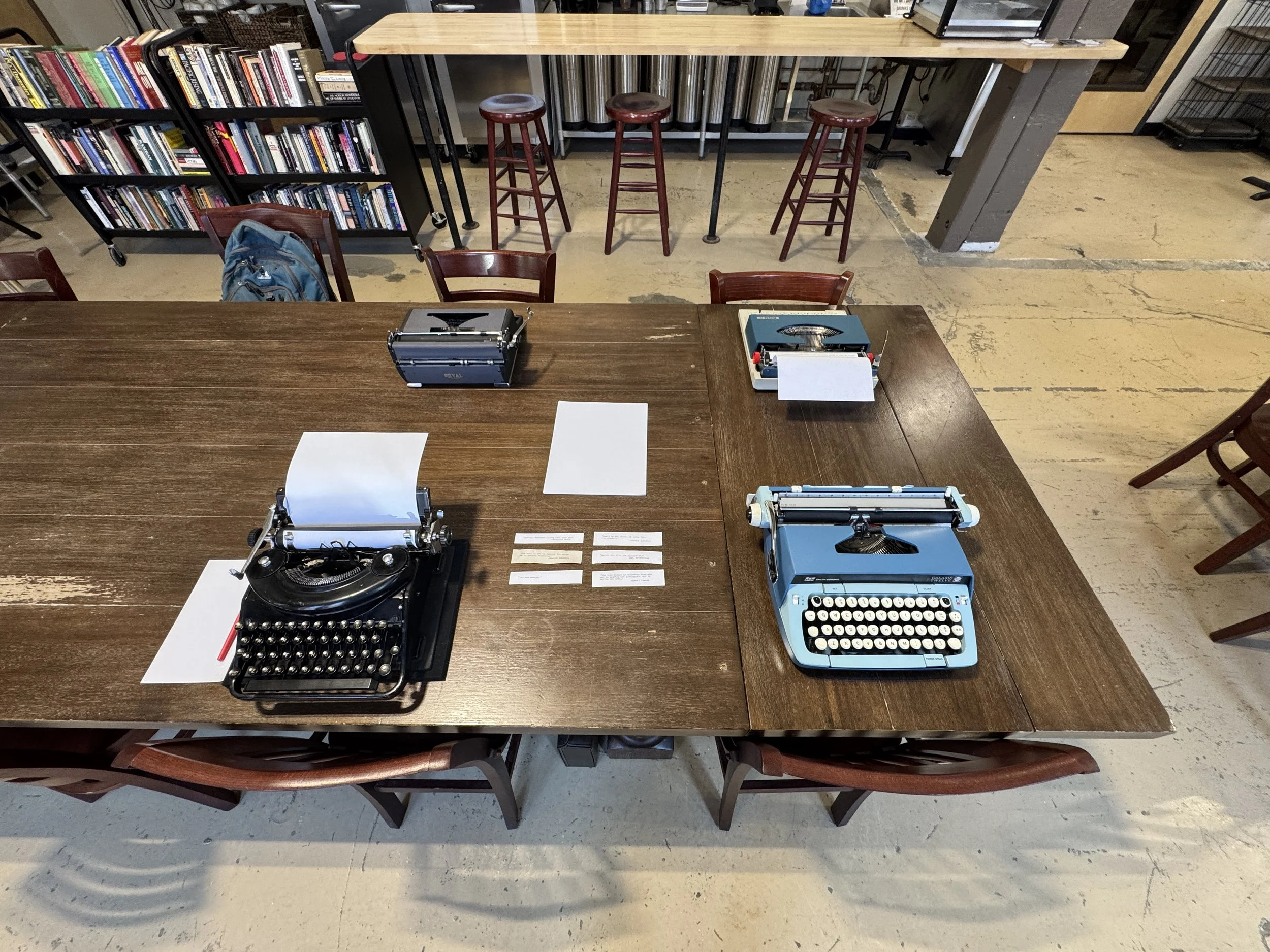
My machines pictured—top-left to bottom-right (with their names): Royal Quiet De Luxe, Dreyfuss edition (Dorothy), Royal Swinger (Skip), Underwood Noiseless 77 (Evee), Smith-Corona Galaxie Twelve (Joan)
I brought extra typewriters so that people without machines could join, and for enthusiasts to try one they may not have used before. People enjoyed trying the different machines and one of the partners, sans-machine, was able to have a good time for themselves, and join in with their partner’s world. That same person commented after the event how they “enjoyed seeing so much enthusiasm in one room”. The question “are you going to do this again?” happened early on in the meetup, to my delight.
After everyone left, someone asked what went on, as I was putting away my machines. We talked about the event, I let them play with the typewriters, and now they’re a part of the group. There’s been lingering interest, too. Since that meetup (only a few days ago) we’ve been chatting via email and private chat. A little community has formed, and that has been very cool.
Community is why I’ve done any of this social media stuff. I’m trying to help others feel a sense of connection and belonging—a way to see they’re not alone. So many of us feel isolated. The irony is that if we could step out of our isolation we would find that connection we seek is but an arms-length away.
So, if you’re feeling alone or disconnected, try finding a Reddit or Facebook group of something that interests you. Don’t worry if you’re “no good” at it—there will be more experienced people there, more than happy, to show you the ropes. You might just find that community you’ve been looking for.
Until next time, be good to each other!
Dave

Embrace the mistakes.
Celebrate imperfection.
Going Analog
Going Analog is about using screens more intentionally and diving into non-digital activities. This is my first post about the process I’ve been undertaking for the last seven years.
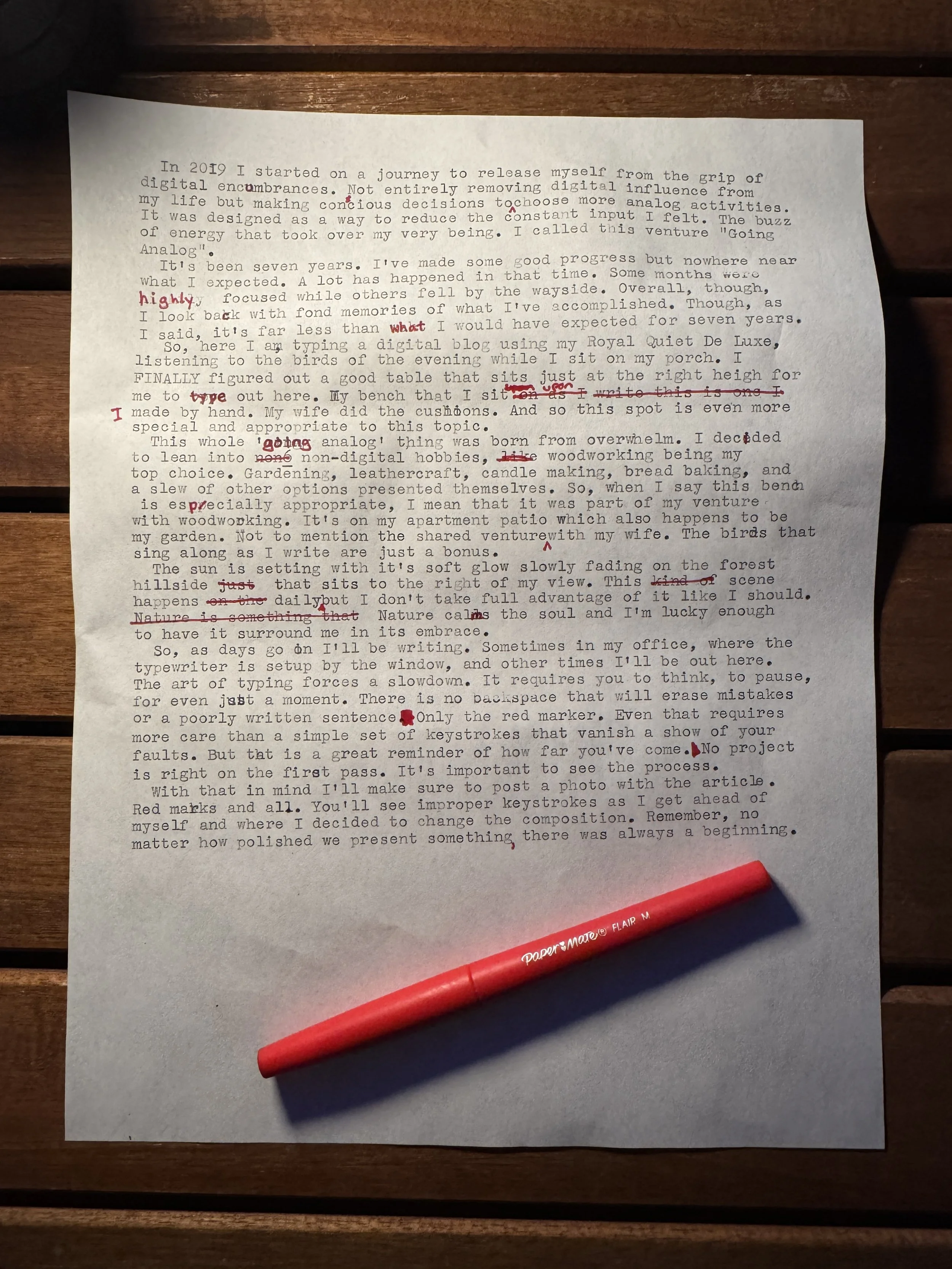
In 2019 I started on a journey to release myself from the grip of digital encumbrances. Not entirely removing digital influence from my life but making conscious decisions to choose more analog activities. It was designed as a way to reduce the constant input I felt. The buzz of energy that took over my very being. I called this project “Going Analog”.
It’s been seven years. I’ve made some good progress but nowhere near what I expected. A lot has happened in that time. Some months were highly focused while others fell by the wayside. Overall, though, I look back with fond memories of what I’ve accomplished. Though, as I said, it’s far less than what I would have expected for seven years.
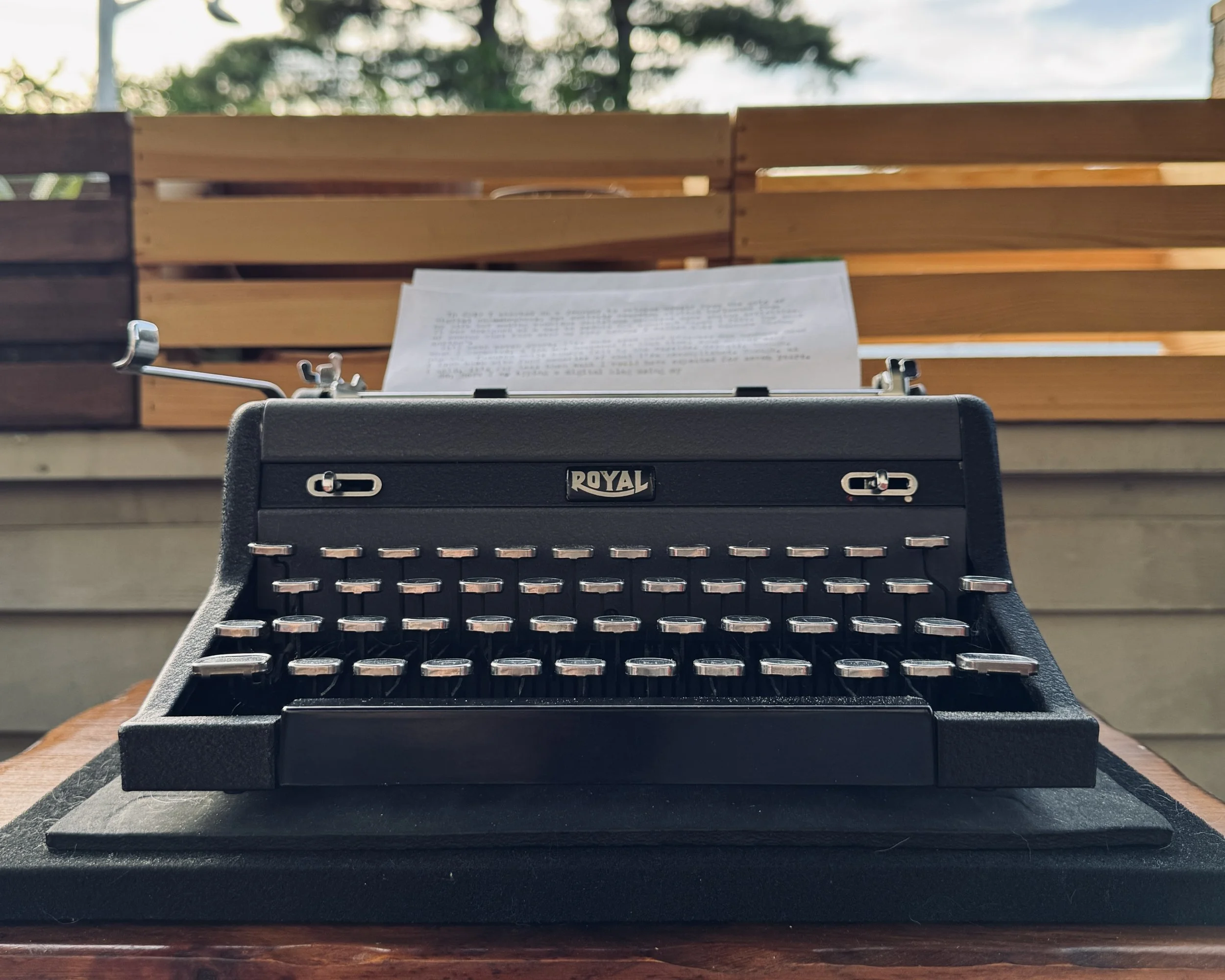
So, here I am typing a digital blog using my Royal Quiet De Luxe, listening to the birds of the evening while I sit on my porch. I finally figured out a good table that sits at just the right height for me to type out here. The bench that I sit upon, I made by hand. My wife crafted the cushions and so this spot is even more special and appropriate to this topic.
“Going Analog” was born from overwhelm. I decided to lean into non-digital hobbies, woodworking being my top choice. Gardening, leathercraft, candle making, bread baking, and a slew of other options presented themselves. So, when I say this bench is especially appropriate, I mean that it was part of my woodworking practice. It’s on my apartment patio which also happens to be my garden. Not to mention the shared venture with my wife. The birds that sing along as I write are just a bonus.
The sun is setting with its soft glow slowly fading on the forest hillside that sits to the right of my view. This scene happened daily but I don’t take full advantage of it like I should. Nature calms the soul and I’m lucky enough to have it surround me in its embrace.
So, as days go on I’ll be writing. Sometimes in my office, where the typewriter rests by the window, and other times I’ll be out here. The art of typing forces a slowdown. It requires you to think, to pause, for even just a moment. There is no backspace that will erase mistakes or a poorly written sentence. Only the red marker. Even that requires more care than a simple set of keystrokes that vanish a show of your faults. But that’s a great reminder of how far you’ve come.
No project is right on the first pass. It’s important to see the process. With that in mind I’ll make sure to post a photo with the article. Red marks and all. You’ll see improper keystrokes as I get ahead of myself and where I decide to change the composition. Remember, no matter how polished we present something there was always a beginning.
Embrace the mistakes.
Celebrate imperfection.